
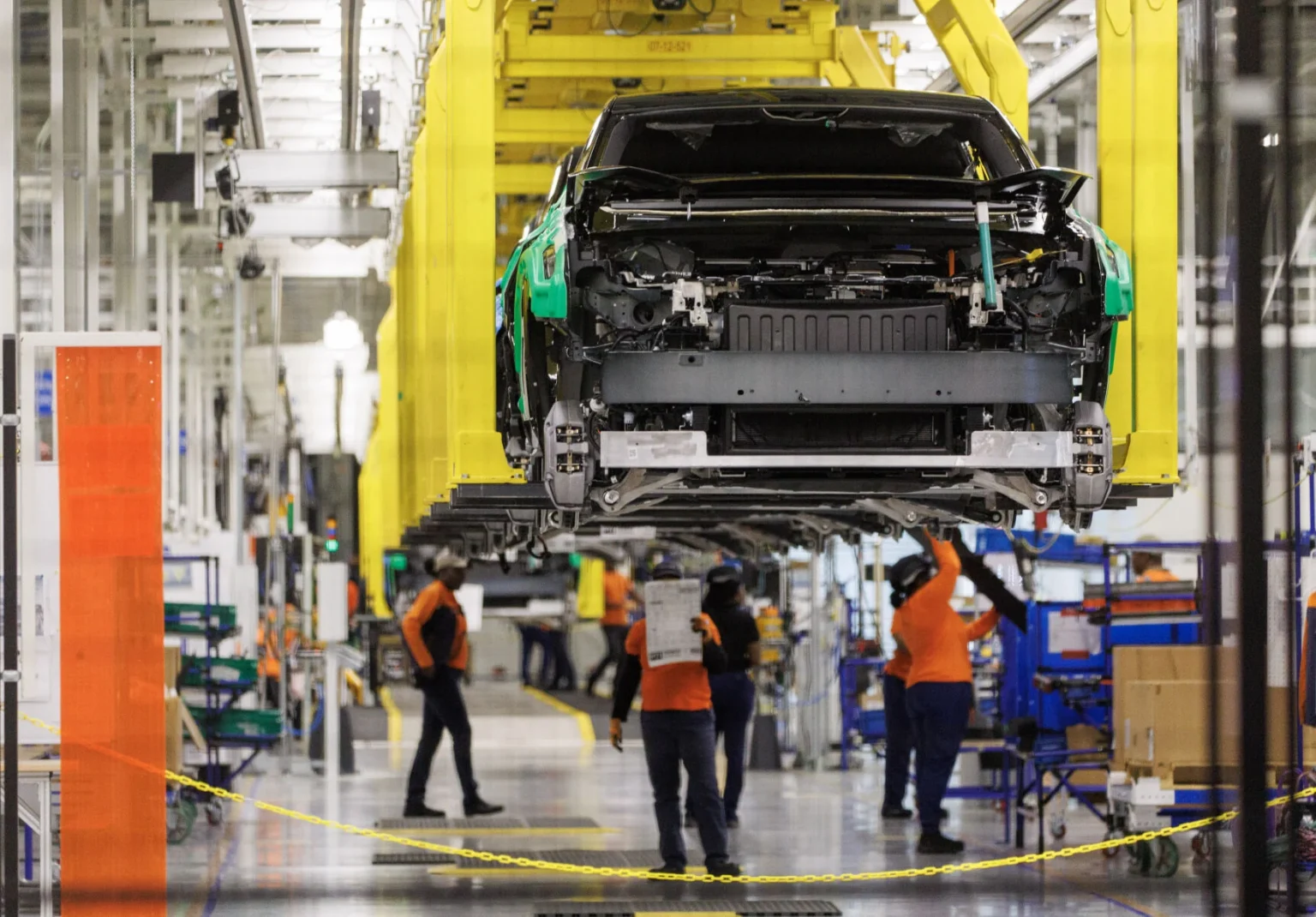
Volvo Cars reemphasized its strategy to build vehicles closer to its customers after announcing another major financial restructuring, saying its South Carolina plant will play a vital role in the company’s turnaround.
The global automaker reported a bigger-than-expected operating loss late last week, namely tied to a steep sales decline within the hypercompetitive China car market. It also said it plans to eliminate another 2,500 jobs to rein in expenses, mostly in Sweden, on top of 3,500 cuts last year.
The gloomy update and outlook triggered a 24 percent decline in Volvo’s stock price on Oct. 23.
“The third quarter of 2026 was very disappointing and reflects a year that has become far more challenging than originally anticipated,” CEO Håkan Samuelsson said Friday. “Our ongoing turnaround plan therefore needs a decisive reinforcement.”
He left open the possibility of more job cuts and other cost reductions next year “if this does not work.”
“I really hope we can avoid that,” Samuelsson said.
Volvo’s financial struggles reflect the squeeze European automakers are feeling from lackluster demand, intense competition in China from local rivals, excess factory capacity and higher U.S. tariffs.
Last year, Samuelsson came out of retirement and announced a “build where we sell” production strategy to make Volvo more competitive in the rapidly changing, capital-intensive automotive market. He was asked Friday whether the company took some responsibility for its latest crisis.
Lexington development standards enacted 3 years ago could soon be wiped out for half of the county
“We should have maybe realized earlier that we need to be more regional in China,” he said during a webcast with investors. “Maybe we should have also realized earlier that tariffs would come, so we need to localize more in the U.S.”
He added that the company is “addressing” its American weak spot by adding its top-selling XC60 midsize SUV to the assembly line at its $1.3 billion South Carolina factory.
Production of two versions of the electric-gas hybrid is expected to begin in Ridgeville early 2027 rather than late 2026 as originally planned. The vehicles will be built along with the battery-powered, sluggish-selling EX90.
“So this is a good start,” Samuelsson said. “But then the really big move will be later … this decade when we bring in a really all-new car, absolutely attractive for the U.S. market.”
The company hasn’t disclosed many details about the next vehicle, other than it will be a “next generation hybrid” and will go into production by 2030.
The Swedish carmaker, which is owned by China-based Geely Holding Group, stressed Friday that it “remains fully committed to our plant in South Carolina.”
“With our increased focus on regionalization and goal of building where we sell, the Volvo Cars Charleston plant is more important than ever with the aim of reaching full utilization in the coming years,” a spokesperson said in a written statement.
The Berkeley County factory is Volvo’s only U.S. manufacturing site. It was designed to turn out about 150,000 cars annually but hasn’t come close to reaching its capacity since production began more than eight years ago.